

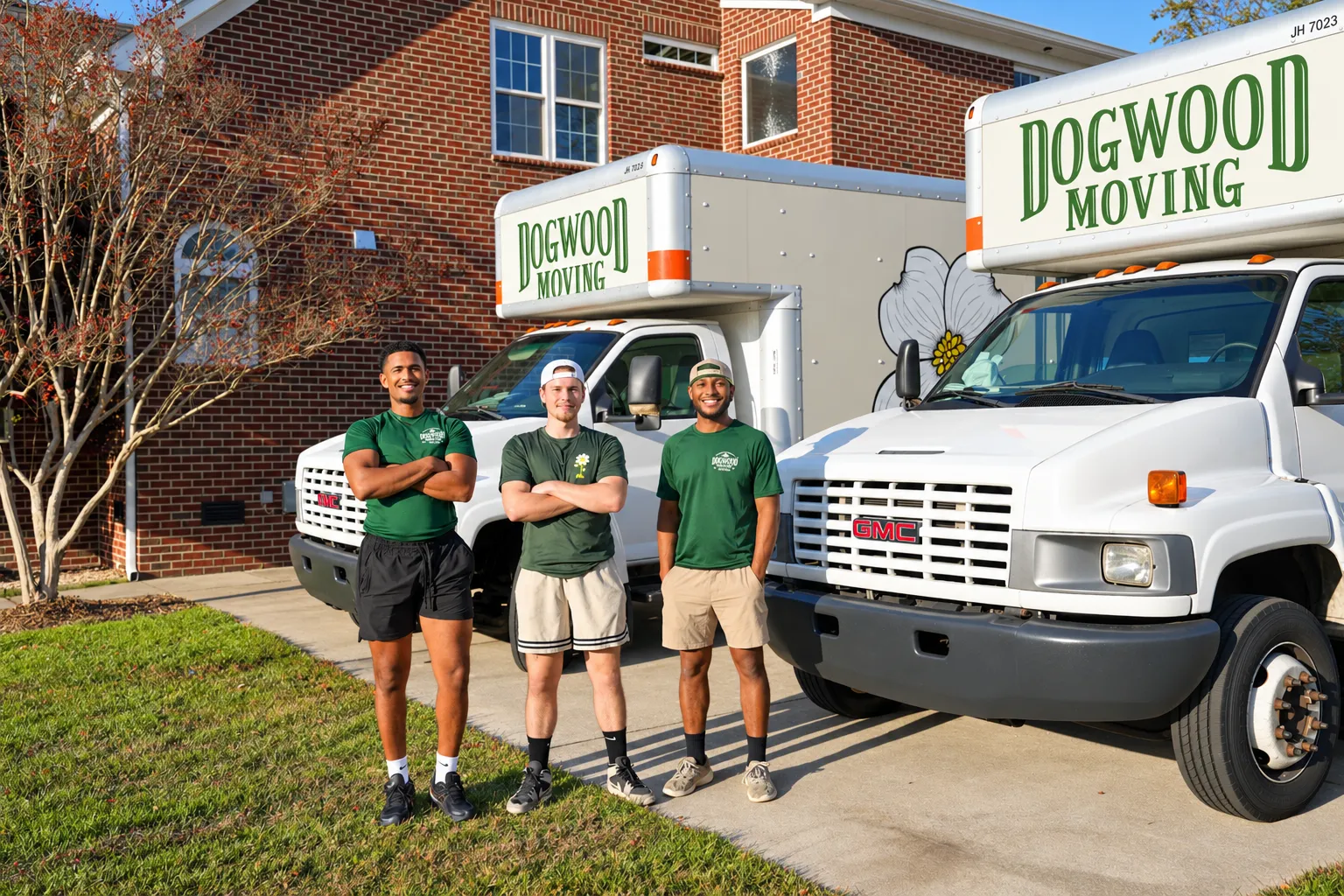
By Ryan King, founder of Dogwood Moving Co. | King’s Moving Manual
One of the most common questions customers ask is, “How many movers and trucks do I actually need?”
After tens of thousands of moves, we have a strong understanding of what different sizes of moves usually require. A small furniture move may be a great fit for two movers. A fully furnished apartment often benefits from three. A larger home may need multiple trucks and a team of six to eight people.
But the right answer comes down to what you are moving and how we will get it out of one location and into the next. Square footage gives us a starting point. It does not tell us everything inside your home.
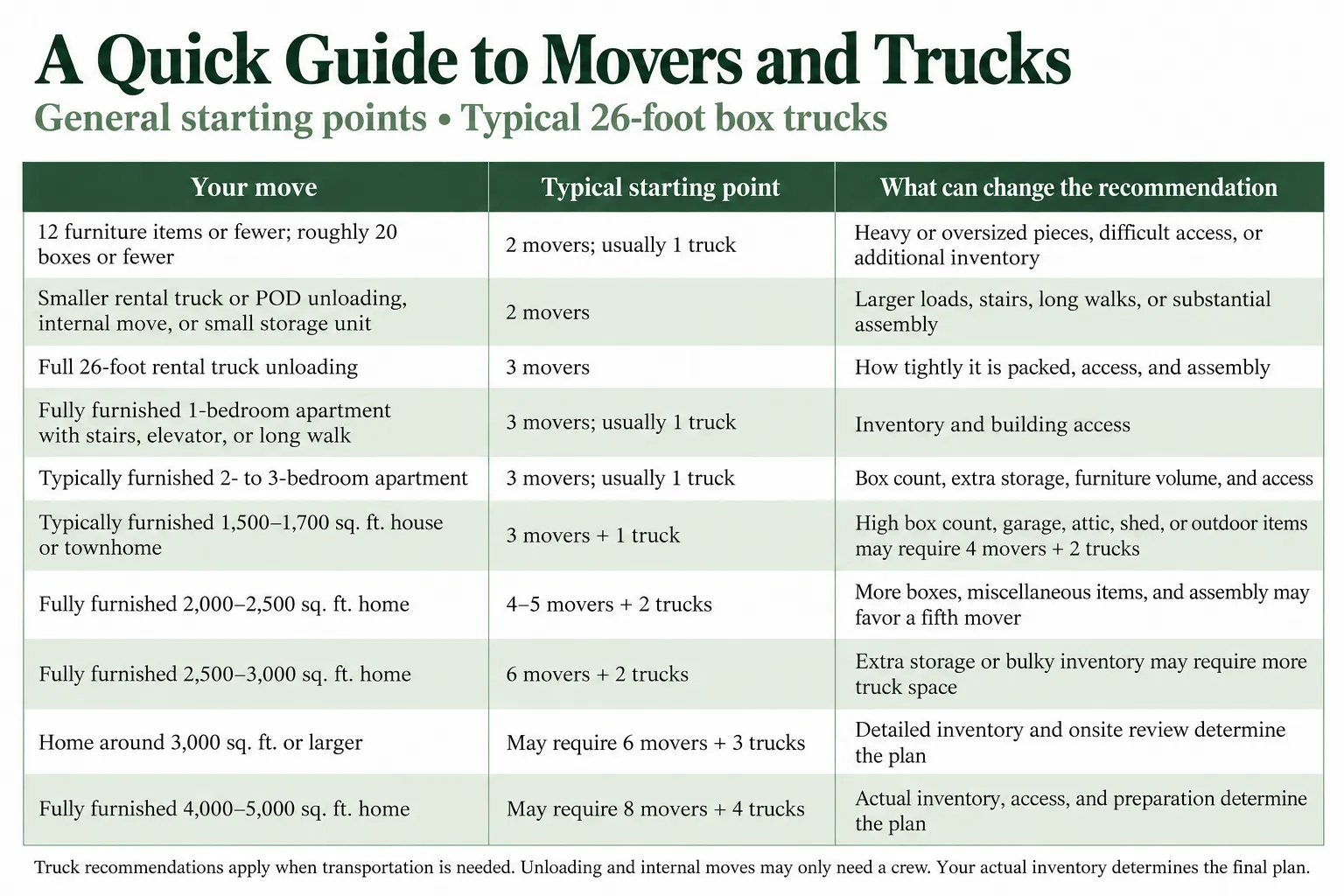
The guide below reflects the baselines we use at Dogwood. These are practical starting points based on our experience—not a guarantee that every home of a certain size needs the same crew.
When Are Two Movers Enough?
A two-person team is a great fit for many smaller moves. As a general baseline, we look at moves with approximately 12 furniture items or fewer and a box count of around 20 or fewer.
That may be a bedroom suite, a few living-room pieces, or a partial household move. Two movers can also be a good fit for:
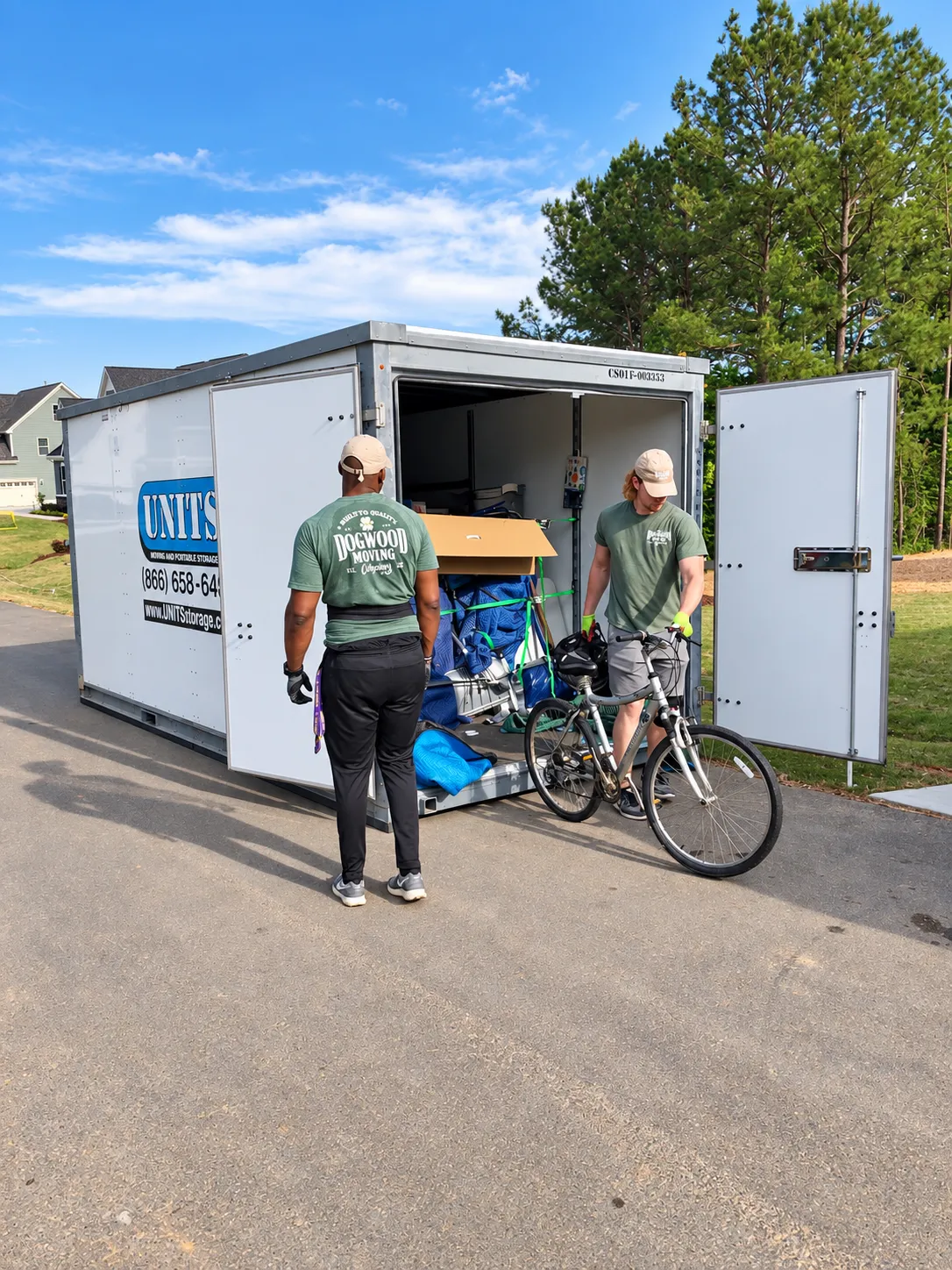
- Unloading a smaller rental truck or POD.
- Moving furniture between rooms within your home.
- Moving a small amount of inventory into or out of storage.
- Moving a limited selection of furniture while most belongings stay behind.
The item count is only a starting point. Twelve small, straightforward pieces are a different job from twelve oversized or unusually heavy pieces. Tell us about anything that may need special handling so we can recommend the right team.
When Does a Three-Person Team Make More Sense?
Once the inventory gets larger—or the route between the truck and your home gets more time-consuming—a third mover can make a meaningful difference.
For example, if you are unloading a 26-foot rental truck packed to the brim, we typically prefer a three-person team over two. There is enough inventory to keep that additional person working throughout the unload.
A third mover also gives the crew more flexibility. Two people can carry heavier furniture while the third works on assembly, disassembly, boxes, or keeping the loading process organized.
One-bedroom apartments
A one-bedroom apartment may sound like a small move, but the building can change the workload significantly.
If it is fully furnished and located on the third floor, or if the crew has an elevator and a long hallway to navigate, a three-person team is often the better fit. Every trip takes longer, and the additional mover helps the team keep work moving across different parts of the job.
A lightly furnished one-bedroom apartment with easy access may still fit a two-person team. The furniture, boxes, and access details matter more than the bedroom count alone.
Two- and three-bedroom apartments
For a typically furnished two- or three-bedroom apartment, three movers are our usual starting point.
At this size, there is generally enough furniture and boxed inventory for the crew to divide responsibilities efficiently. Let us know about storage closets, balconies, garages, or anything else outside the main apartment that also needs to move.
How Much Does One 26-Foot Moving Truck Hold?
In our experience, one 26-foot box truck commonly holds the contents of about 1,500–1,700 square feet of typically furnished living space.
That is an estimate of household contents, not a measurement of truck capacity in square feet. Two homes with the same floor plan can have very different amounts of furniture and belongings.
A typically furnished house or townhome in this range is often a good fit for three movers and one truck. But this is also where we begin looking closely at possible overflow.
What pushes a one-truck move into two trucks?
Picture a fully furnished three-bedroom, two-bath home that is 1,600 square feet. The living-space furniture may fit our usual one-truck baseline. Now add:
- A high box count, such as 60–80 boxes.
- Garage shelving, tools, and equipment.
- Attic storage.
- Outdoor furniture and grills.
- Shed contents.
Those belongings need truck space too, even though those areas are not reflected in the home's stated living-space square footage.
Some garage and outdoor items also do not stack as neatly or safely as uniform boxes. They may take up more space than their item count suggests.
In that situation, four movers and two trucks can be the better plan.
What Do Fully Furnished 2,000–2,500-Square-Foot Homes Usually Need?
For a fully furnished home in the 2,000–2,500-square-foot range, two trucks are generally our starting point.
The goal is to have enough space to move the inventory without needing a second trip. Returning to load again adds another round of driving and loading to the day.
A four-person team with two trucks is a common fit. The crew can work in two pairs to carry furniture and handle different areas of the home.
When is a fifth mover helpful?
A fifth mover can be beneficial when the home has a higher box count, substantial miscellaneous inventory, or more assembly and disassembly.
While two pairs carry larger pieces, the additional person can focus on other work that needs to happen. That helps prevent the furniture-moving process from stopping every time someone needs to take a bed apart or finish another task.
The extra mover is most useful when there is enough work to keep them productive. We recommend crew size based on the job, rather than automatically adding people because the house reaches a certain size.
What About 2,500–3,000-Square-Foot Homes?
For a fully furnished home around 2,500–3,000 square feet, we typically start with six movers and two trucks.
Homes in this range often have four bedrooms, a loft or bonus room, and sometimes additional living areas such as a sunroom. The box count and miscellaneous inventory can add up quickly.
We have found that a six-person team gives us a more effective way to tackle this size of move. The crew can work in multiple pairs, handle different parts of the house, and keep furniture preparation, carrying, and loading moving forward.
Truck space still depends on the inventory. A heavily furnished home with substantial garage, attic, or outdoor contents may need an additional truck.
What Do Homes Over 3,000 Square Feet Need?
Once we get into homes around 3,000 square feet and above, the plan needs to become more specific.
Some moves are a fit for six movers and three trucks. A fully furnished home around 4,000–5,000 square feet may require eight movers and four trucks.
These are examples of the scale we regularly handle. They are not automatic requirements for every house in those ranges.
At Dogwood, we use onsite estimates for these larger moves so we can review the actual furniture, boxes, storage areas, access, and preparation needs. At this size, a broad average alone is not enough to build a reliable plan.
The important question becomes: What team, truck space, and preparation will this particular move require?
Why Square Footage Can Be Misleading
I have seen 2,000-square-foot homes that only needed two movers because the customers were taking a bedroom suite or a small selection of furniture.
I have also seen 3,000-square-foot homes work with three movers because much of the furniture was staying behind for staging.
On the other end, we have moved 1,200-square-foot homes that needed two trucks. Every room was packed, the box count was high, and there were garage or shed items to include.
None of those situations is unusual enough to ignore. They show why we ask detailed questions instead of assigning a crew based only on the size of the home.
If you are more of a minimalist, you may fall below the baseline. If you have a fully furnished home, plenty of stored belongings, and a high box count, you may fall above it. Our job is to understand that before moving day.
More Movers and More Trucks Solve Different Problems
More movers help with the workload. More trucks help with the space needed to transport your belongings.
A third mover can improve the flow of an apartment move with stairs and a long hallway, even when the inventory still fits in one truck.
An additional truck may be necessary because the furniture and boxes will not fit safely in the first one. That does not automatically mean the job needs the largest crew available.
We look at both parts together. The right plan should give the team enough people to work efficiently and enough truck space to load your belongings properly.
What Should You Tell Your Moving Company?
To get a useful recommendation, give your mover a clear picture of the job:
- The furniture you are taking: List it by room and identify anything staying behind, being sold, or remaining for staging.
- Your estimated box count: Update it as packing progresses, especially if the number grows significantly.
- Items outside the main living space: Include garages, attics, sheds, patios, balconies, and storage units.
- Access at both locations: Mention stairs, elevators, long hallways, parking restrictions, steep driveways, and long walks.
- Assembly and disassembly: Tell us about beds and other pieces that need attention, including anything unusual or complicated.
- Heavy or oversized pieces: Describe them and provide photos when helpful.
The more accurate the inventory, the better we can plan your crew and trucks. If something changes, let us know before the move so we can review whether the original recommendation still fits.
The Right Crew Starts With the Right Information
These baselines can help you understand where your move might fall, but the final recommendation should come from a conversation about your actual inventory and the logistics at both homes.
At Dogwood, we want to send a team that can work efficiently, protect your belongings, and arrive with the space and equipment the job requires. Whether that means two movers for a few pieces or eight movers and four trucks for a larger home, the goal is the same: a well-planned move with clear expectations before the crew arrives.