

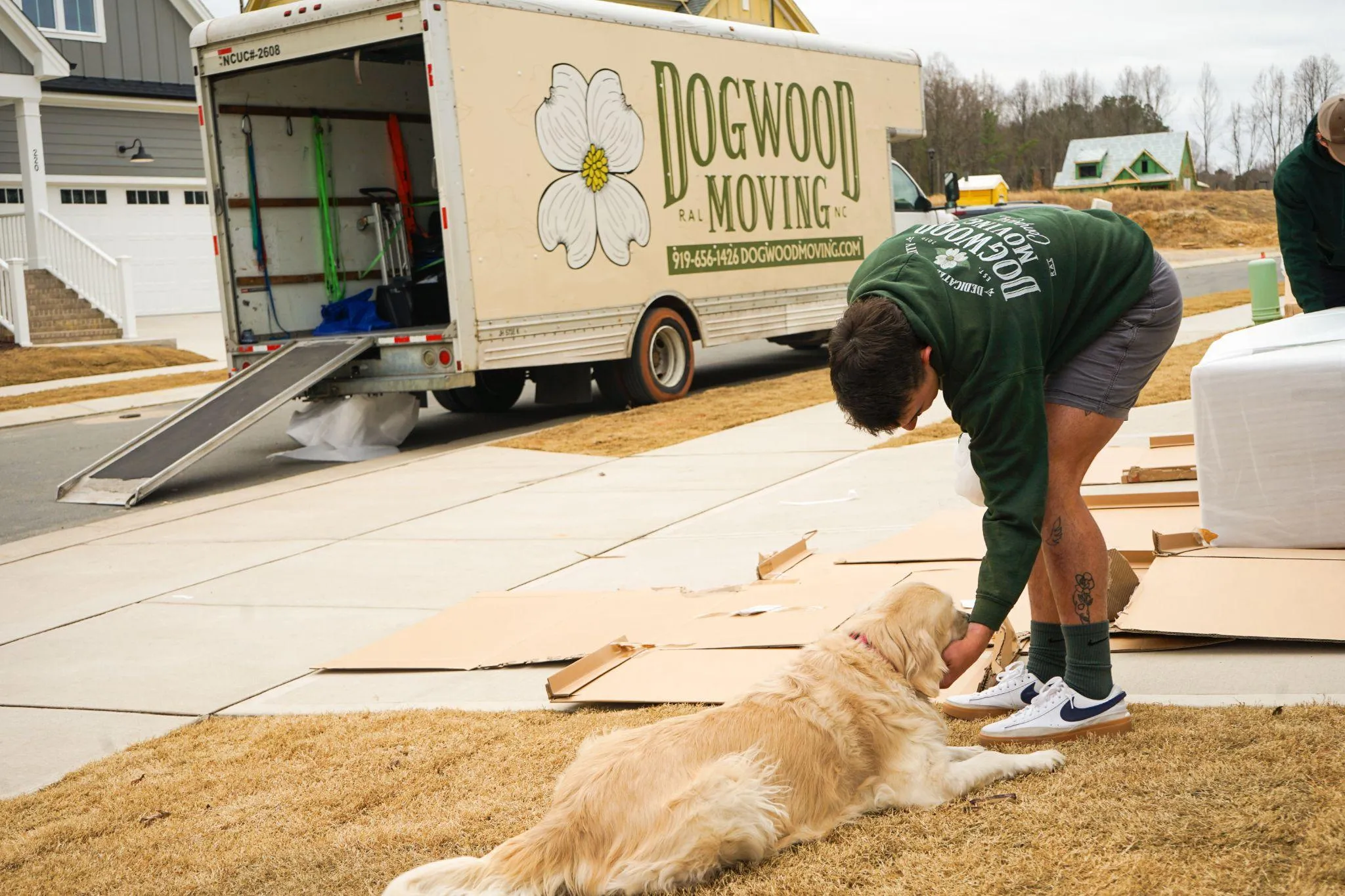
By Ryan King, Founder of Dogwood Moving Co. — King’s Moving Manual
Choosing a moving company means choosing who you trust to come into your home, handle your belongings, and help you through a major transition. Price matters, but so do the people showing up, the preparation behind them, and the way the company communicates when you need an answer.
I started in this industry carrying furniture. I worked my way into management and eventually founded Dogwood Moving Co. That experience shaped how I look at moving: a successful move starts well before the truck arrives. It starts with an honest conversation, a realistic estimate, and a team that understands what they are being asked to do.
If I were choosing a moving company in Raleigh for my own family, here is what I would look for.
Start with your budget, then compare what you are getting
If budget is your biggest concern, be upfront about it. Get a few written estimates and ask each company what is included. There is nothing wrong with looking for an affordable move.
But an hourly rate alone does not tell you what your move will cost or what your experience will be like. A quote for two movers is different from a quote for three. A lower rate with a longer estimated time can cost more than a higher rate with an appropriately sized crew. Travel charges, minimums, packing, materials, and additional services can also change the total.
Give each company the same information so you can compare fairly: your inventory, addresses, stairs, elevators, parking situation, packing needs, and anything that needs special handling. If one estimate is much lower than the others, ask what explains the difference. The company may have a reasonable answer, or it may have overlooked part of your move.
The goal is to find a company you can afford and trust to handle the work you actually need.
Research the reputation behind the name
Before you book, spend some time looking beyond the company’s homepage. Read recent reviews across more than one source and look for patterns.
Do customers repeatedly mention careful handling, good communication, hardworking crews, and accurate expectations? Do they describe employees who treated their homes respectfully? Are there recurring complaints about unexpected charges, missed arrival windows, or difficulty getting help after the move?
I would also read how the company responds when something goes wrong. Moving involves people, heavy furniture, tight spaces, and plenty of variables. Even a good company can make a mistake. What matters is whether it communicates, takes the concern seriously, and follows through.
One perfect review does not tell the whole story, and neither does one unhappy customer. Look for consistent behavior over time.
Verify the company’s credentials and ask about protection
For a household move within North Carolina, verify that the company has the appropriate North Carolina Utilities Commission certificate, often called a C-number. You can check the Commission’s carrier information rather than relying only on a website that says “licensed and insured.” For a move across state lines, check the mover’s federal registration through FMCSA.
Ask the company to explain its insurance, workers’ compensation coverage for the people doing the work, and the protection available for your belongings. Request documentation when needed.
“Insured” should start a conversation, not end it. Business insurance and the mover’s responsibility for damaged belongings are different questions. Ask what protection you are selecting, what limitations apply, how damage is reported, and who handles a claim. Do not assume that every damaged item would automatically be replaced at its full purchase price.
Large franchises, established local companies, and smaller operators can all provide good service. Renting a truck or offering labor-only help does not automatically make someone a rogue mover. The warning signs are missing required credentials, unclear coverage, misleading promises, and no clear accountability. If you are hiring loading or unloading help for your own truck or container, ask specifically what that service covers and when responsibility ends.
Look for transparent pricing
You should understand how your price is determined before moving day. Ask for a written explanation of:
- The number of movers and trucks included.
- The hourly rate or agreed pricing structure.
- The estimated time range and what could change it.
- Travel charges and minimum charges.
- When billable time starts and ends.
- Charges for packing, supplies, specialty items, or other services.
- Payment terms and any payment-method fees.
At Dogwood, we publish our rates online and use consistent rates for the same crew and truck configuration seven days a week. We do not decide to charge one customer more simply because we think they would be willing to pay more.
A different crew size or service may have a different price. Some companies also have clearly explained scheduling differences. What I want customers to look for is a pricing system they can understand, with an explanation for any difference between quotes.
You should be able to ask, “How did you arrive at this estimate?” and receive a straightforward answer.
Pay attention to the questions behind the estimate
A useful estimate takes more than your square footage and bedroom count. Two homes of the same size can have very different inventories and access conditions.
A company should ask about boxes, furniture, garage and attic contents, outdoor items, stairs, elevators, walking distance, parking, and assembly or disassembly. A Raleigh apartment with an elevator reservation and a long hallway needs different planning from a ground-floor apartment where the truck can park near the door.
Photos, a video walkthrough, or an onsite visit can help when the inventory or access is complicated. You should also understand what you are expected to have ready, such as sealed boxes, clear pathways, and furniture emptied of smaller belongings.
Software can help organize an estimate. The important question is whether the person using it understands the work and checks the details. A confident number is only useful if it reflects your move.
Ask about the experience of the people planning your move
I value firsthand moving experience because it helps someone recognize what a customer may not know to mention: a difficult driveway, furniture that needs extra protection, or an inventory that calls for another truck.
At Dogwood, our office team has worked its way up from the field through leadership and into office management. My own path followed that progression as well. When we discuss a move, we draw on experience doing the work, leading crews, and managing the day when plans change.
That connection also helps the office and field team communicate. The people planning the move understand what the movers need to know, and the movers have support from people who understand their challenges.
Someone does not have to have carried furniture to be a capable estimator. But I would ask how the company trains its estimators, who reviews complicated moves, and how the information you provide reaches your crew.
Know who will actually show up
One of the most useful questions you can ask is: “Are you the company performing my move, or are you arranging it through another company?”
A moving broker arranges transportation with a mover rather than performing the transportation itself. Brokers can operate legitimately, but customers need to understand that distinction before booking.
If another company will perform your move, ask for its name, verify its credentials, and understand whose agreement you are signing. Ask who is responsible for the estimate, scheduling, payment, and any damage claim. If the company cannot clearly explain those responsibilities, pause before committing.
The same principle applies to subcontracted crews: find out who employs or engages the people entering your home and who supervises their work. The company name you research should lead to a clear understanding of the team you are hiring.

Ask about hiring, training, and supervision
You are trusting a crew with more than furniture. You are giving people access to your home and belongings that may have personal value far beyond their price tag.
Ask how the company screens its workers, whether it performs background checks, how new movers are trained, and who leads the crew. Ask whether it uses employees, subcontractors, or temporary labor and how it maintains its standards across those arrangements.
Everyone has a first day. Being new is not the problem; being sent into a customer’s home without preparation or appropriate supervision is. A new mover should have clear expectations and experienced people guiding the work.
Training should cover protecting furniture and floors, safe lifting, loading, customer communication, and reporting a problem when it happens. You do not need an entire training manual, but the company should be able to explain its process beyond “our guys know what they’re doing.”
Notice how the company makes you feel—and why
Moving can be a vulnerable experience. You may be leaving a home you love, managing a closing, moving with children, or simply trying to keep everything together during a stressful week.
Pay attention to how a company handles your questions. Does someone listen? Are the answers clear? Do you feel comfortable mentioning a concern, or do you feel rushed toward a deposit?
Comfort matters, but I would pair that feeling with evidence: verified credentials, a clear written estimate, a solid reputation, and a team that explains how it works. A friendly sales conversation should be supported by a dependable operation.
You should feel that the company understands your move and will communicate with you if something changes.
Questions I would ask before booking
- Will your company perform the move, and who will be on the crew?
- How do you screen, train, and supervise your movers?
- What crew and truck configuration does my estimate include?
- What charges, minimums, and payment terms apply?
- What could change my estimate, and how would we discuss that change?
- What do I need to have ready before the crew arrives?
- What protection applies to my belongings, and how do you handle a damage claim?
- Who should I contact before, during, and after the move?
Choose a team you trust with your home
My advice is to take price seriously without letting it make the entire decision. A cheap quote can become expensive if it leads to damage, delays, poor communication, or work that was never properly planned. A higher price alone does not guarantee quality, either.
Look for a company whose reputation, preparation, pricing, and people support what it promises. Whether you choose Dogwood or another mover in Raleigh, you deserve clear expectations and a team that treats your home with care.
That is the standard I believe customers should expect—and the standard we work to deliver at Dogwood.